Over 1,500 Political Prisoners in Venezuela Apply for Government Amnesty
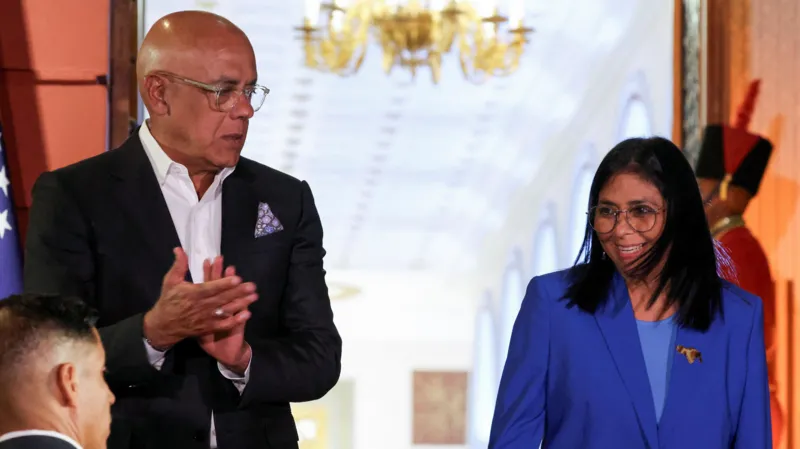
CARACAS, Venezuela – Venezuela’s political landscape saw a significant development this week as more than 1,500 individuals classified as political prisoners have formally requested amnesty under recently enacted legislation, according to the head of the country’s National Assembly.
Jorge Rodríguez, who leads the legislative body and is a close ally of the detained former President Nicolás Maduro, announced on Saturday that authorities are processing 1,557 amnesty requests. He stated that these applications are being handled "immediately" and suggested that the new law could eventually apply to as many as 11,000 inmates.
Rodríguez also confirmed that "hundreds" of prisoners have already been released. Among those freed is politician Juan Pablo Guanipa, who has been a vocal critic of the new measure.
The amnesty law, introduced on Thursday, has drawn mixed reactions. While it offers a pathway to freedom for many, opposition figures and human rights organizations have pointed to specific exclusions that they argue are politically motivated.
Criticism and Controversial Exclusions
A key point of contention involves a clause that denies amnesty to individuals who have called for foreign military intervention in Venezuela. Legal experts have noted that this provision appears tailored to target specific opposition leaders.
Law professor Juan Carlos Apitz of the Central University of Venezuela told CNN Español that this part of the legislation 'has a name and surname,' referring to it as the 'María Corina Machado paragraph,'" according to analysis from legal experts.
It remains unclear whether the amnesty would apply to Machado, a prominent opposition figure who was awarded the Nobel Peace Prize last year. Critics also point out that the law seems to exclude dozens of military officers who have participated in uprisings against the Maduro administration in the past.
Human rights groups have long accused the former Maduro government of using detentions to suppress dissent. The socialist administration has consistently denied holding political prisoners.
Focus on Notorious Prison
The initial wave of releases is reportedly focusing on inmates held at El Helicoide, a notorious prison and detention center in Caracas. Rodríguez stated that authorities are prioritizing cases from "Zona Seven" of the facility, with releases expected to occur "over the next few hours."
Activists have reported that some family members of those detained at El Helicoide have resorted to hunger strikes to demand the release of their loved ones.
The development follows the capture of Nicolás Maduro by U.S. forces on January 3. The United States has since urged Venezuela to expedite the release of political prisoners. Following Maduro's capture, former U.S. President Donald Trump stated that El Helicoide would be closed.
Maduro currently remains in U.S. custody alongside his wife, Cilia Flores, awaiting trial on drug and weapons charges. He has pleaded not guilty and has referred to himself as a "prisoner of war.
February 16, 2026